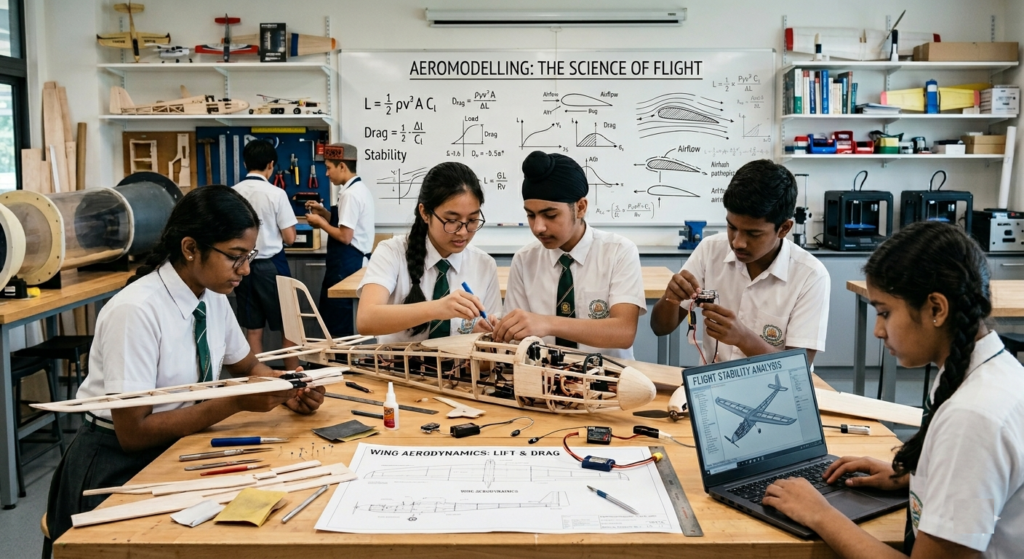
At Flyation, aeromodelling is not just a fun activity—it is a powerful way for students to explore the science and engineering behind flight. By designing, building, and flying model aircraft, students learn how scientific principles work in the real world. Aeromodelling transforms complex scientific concepts into hands-on learning experiences, allowing students to experiment, observe, and truly understand how aircraft stay in the air.
Lift
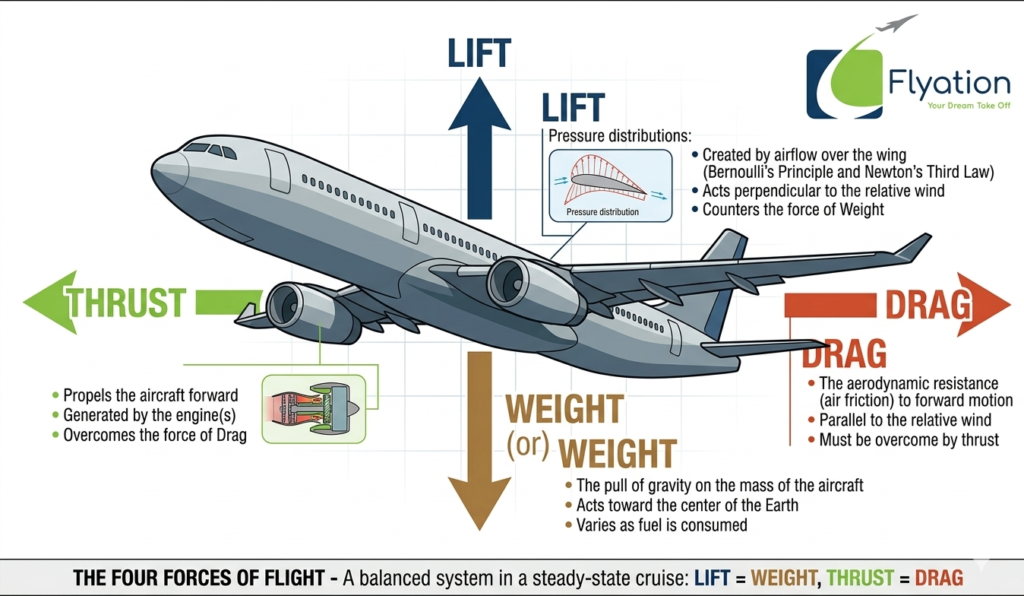
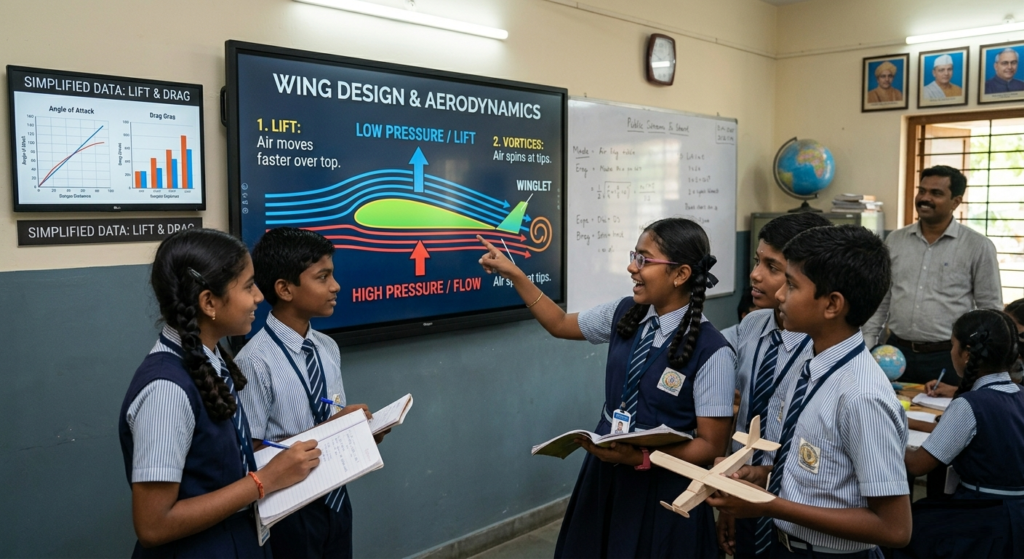
Lift is the upward force generated by the wings of an aircraft. The wing design allows air to flow faster over the top surface and slower beneath it, creating pressure differences that push the aircraft upward.
Weight (Gravity)
Weight is the force of gravity pulling the aircraft toward the ground. For successfulflight, lift must overcome the aircraft’s weight.
Thrust
Thrust is the forward force that moves an aircraft through the air. In aeromodelling, thrust can come from rubber-powered propellers, small electric motors, or the gliding motion of the aircraft.
Drag
Drag is the resistance created by air as the aircraft moves forward. Engineers design aircraft with smooth and streamlined shapes to reduce drag and improve flight Lefficiency.
The design of an aircraft’s wing plays a crucial role in its ability to fly. The curved shape of the wing, known as an airfoil, helps generate lift and enables the aircraft to stay airborne. Through aeromodelling programs, students experiment with different wing shapes and sizes, gaining practical insights into how design variations can influence and improve overall flight performance.