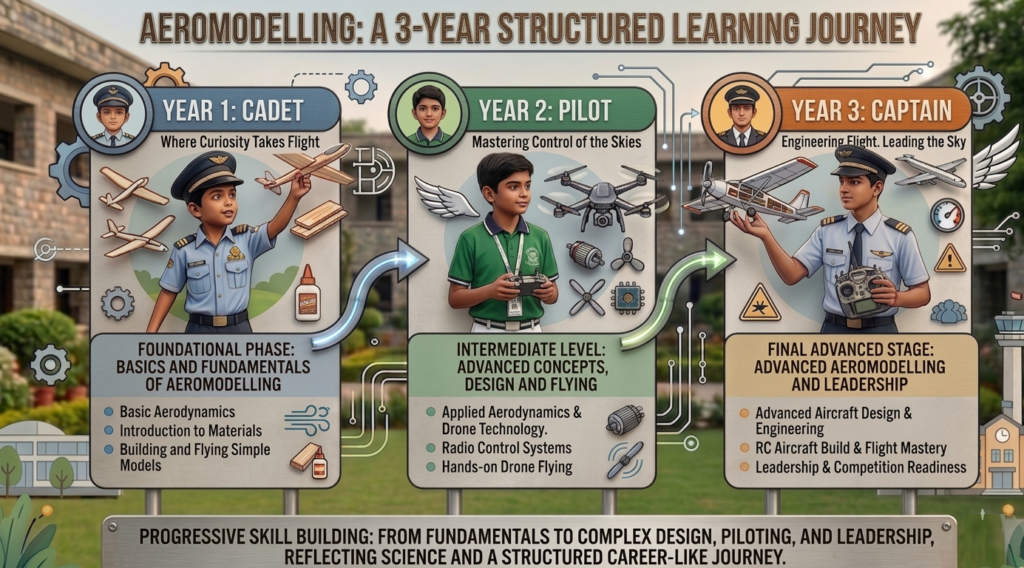
Our Aeromodelling Program is a carefully designed three-year learning journey that transforms students from curious beginners into confident aviation innovators. Structured across progressive levels—Cadet, Pilot, and Captain—the program blends science, engineering, and hands-on experience to deliver real-world learning. This structured pathway ensures continuous skill development, fosters innovation, and prepares students for competitions, higher learning, and future careers in aviation and technology.
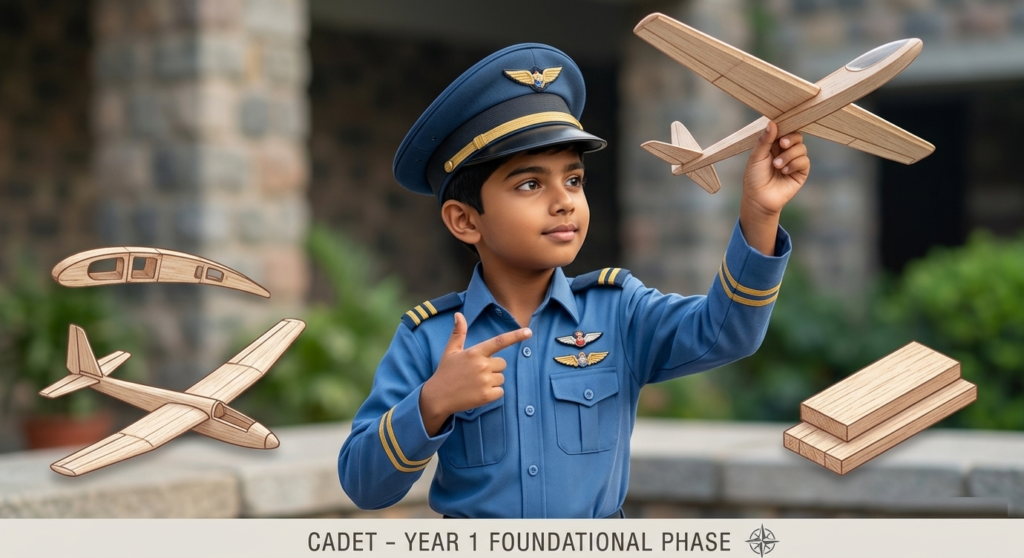
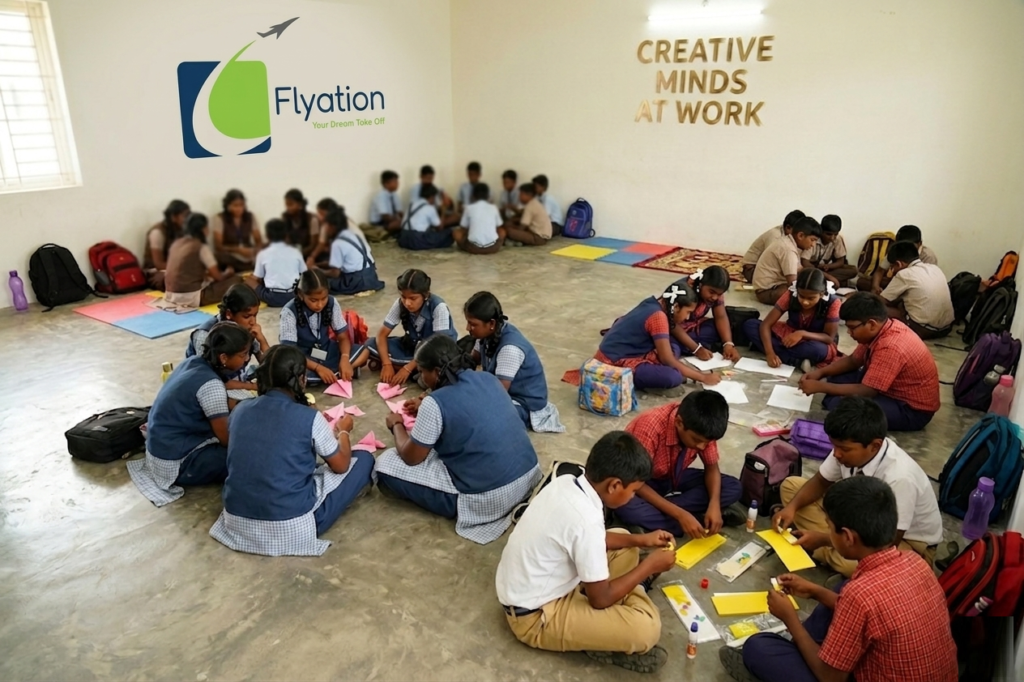
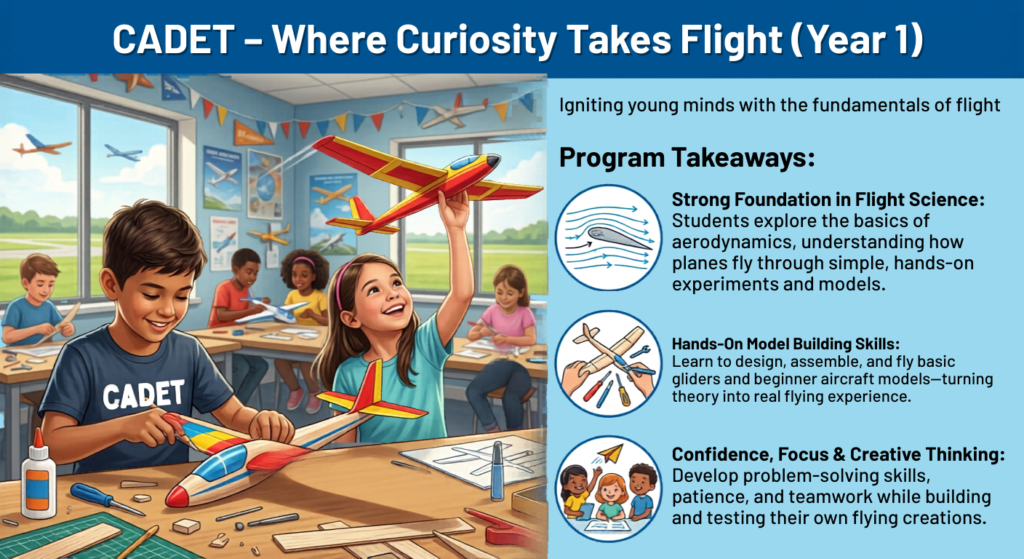
The CADET is designed for students from Grade 4 onwards, and it follows a three-semester learning structure designed to provide students with a balanced blend of theoretical knowledge and practical experience. Each semester spans 2.5 months with 15 hours of structured learning The program integrates classroom concepts with hands-on aeromodelling activities, ensuring that students immediately apply what they learn. This structured approach helps maintain continuous engagement, curiosity, and momentum, making the learning journey both exciting and meaningful.
Students experience the science of flight through a step-by-step hands-on process:
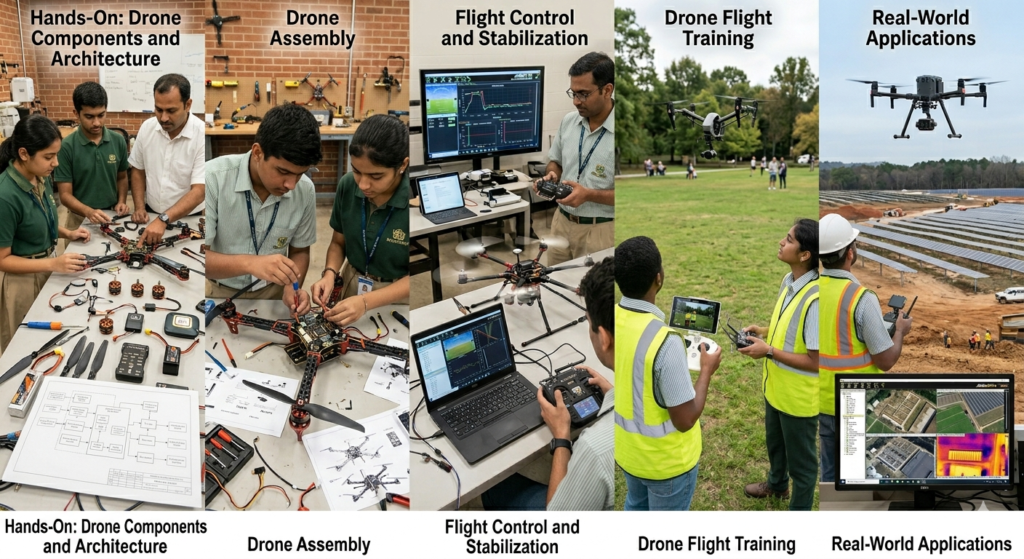
(Drone Assembly and Flight Training)
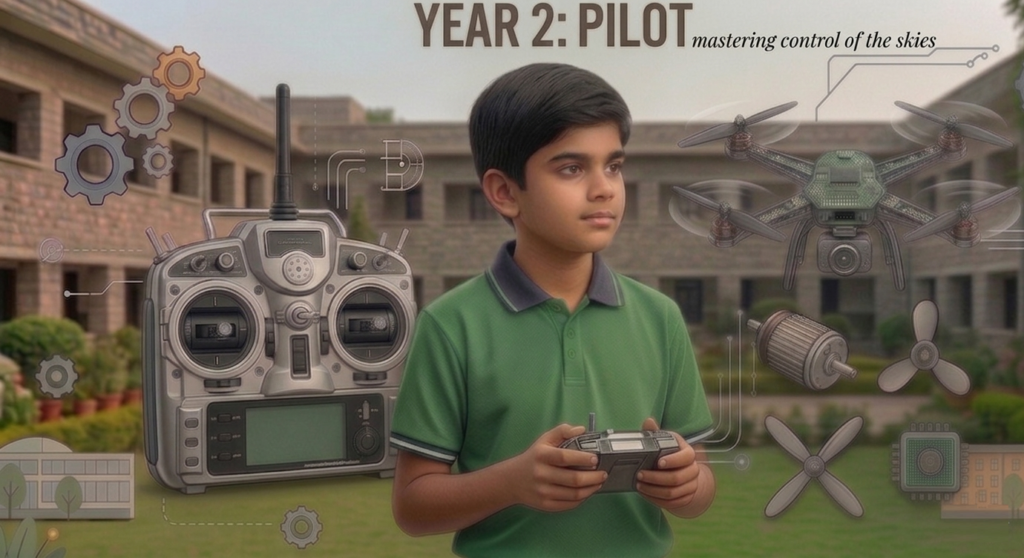
The PILOT Program at Flyation is designed for students who want to move beyond the foundation program and explore the exciting world of drone technology and unmanned aerial systems.
This program introduces students to the design, assembly, and operation of drones, providing hands-on experience with modern aviation technology. Through guided practical sessions, students learn how different components work together to create a stable and controllable flying system.
The program combines engineering principles, electronics, and flight control concepts, giving students a deeper understanding of how drones function in real-world applications.
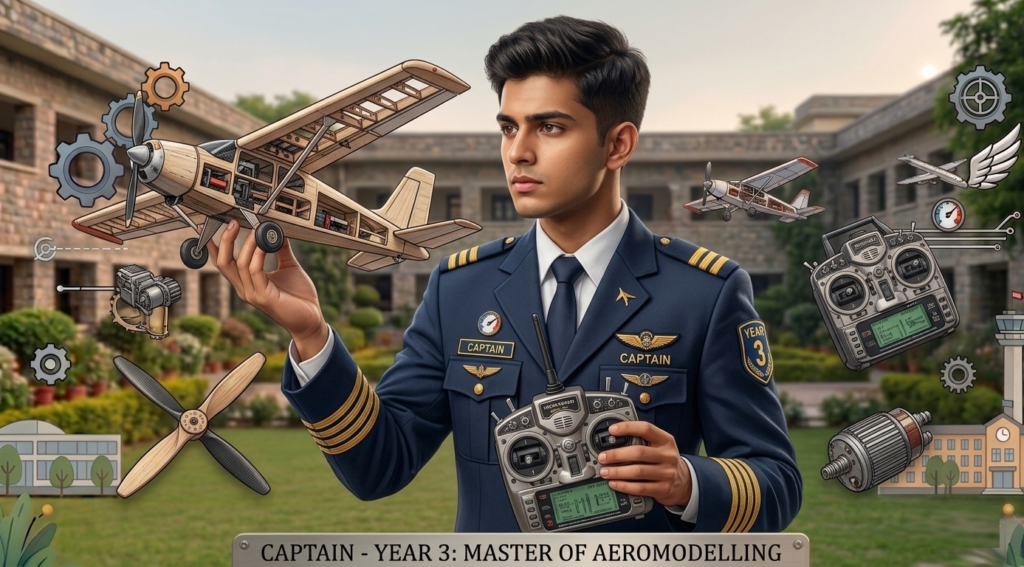
(RC Aircraft Assembly and Flight Training)
The Captain Program at Flyation is designed for students who are ready to advance their aeromodelling skills to a professional level. This program focuses on the design, assembly, and operation of Radio-Controlled (RC) aircraft, providing participants with understanding a deeper aerodynamics, flight of mechanics, and aircraft control systems.
Through a combination of engineering concepts and hands-on practice, students learn how modern RC aircraft are built configured, and controlled during flight.