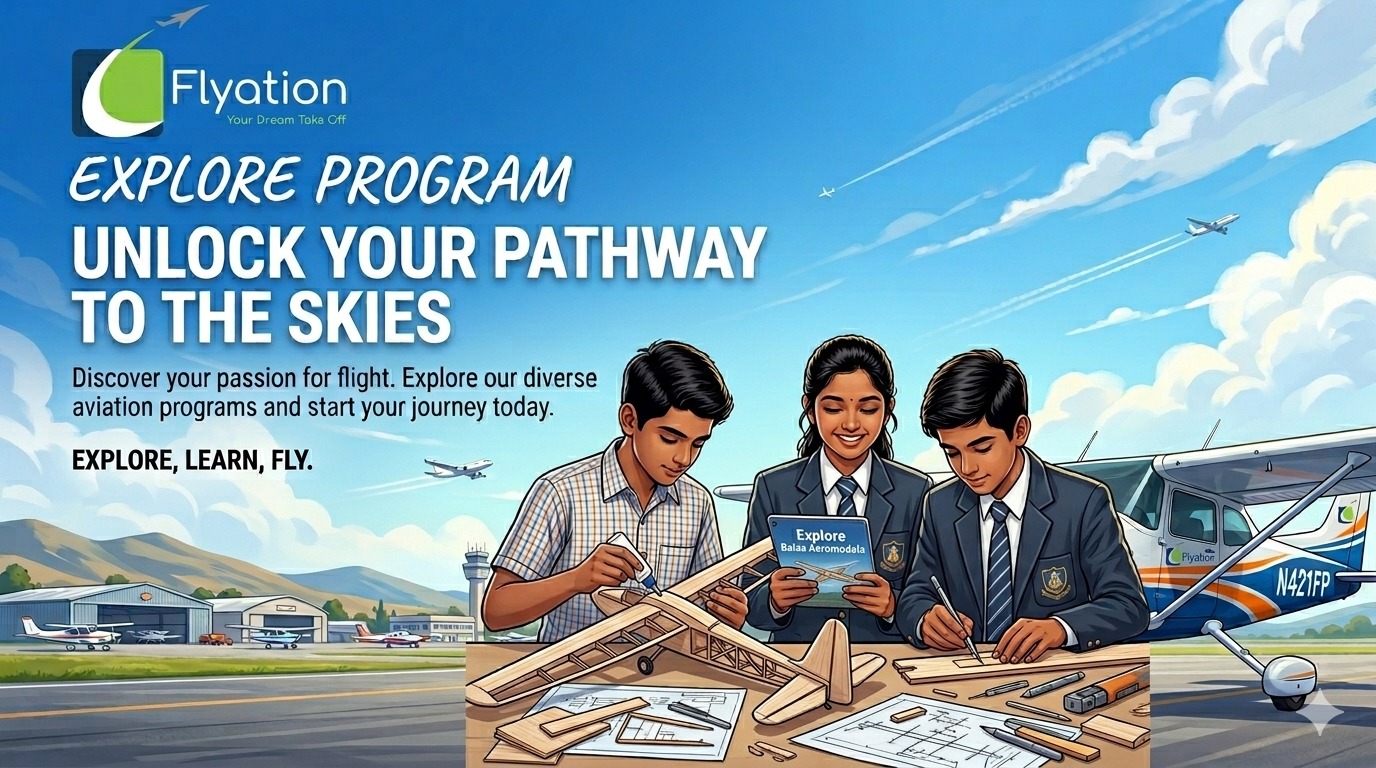
At Flyation, aeromodelling is not just a fun activity—it is a powerful way for students to explore the science and engineering behind flight. By designing, building, and flying model aircraft, students learn how scientific principles work in the real world. Aeromodelling transforms complex scientific concepts into hands-on learning experiences, allowing students to experiment, observe, and truly understand how aircraft stay in the air.
The flight of an aircraft is controlled by four fundamental forces:
Lift
Lift is the upward force generated by the wings of an aircraft. The wing design allows air to flow faster over the top surface and slower beneath it, creating pressure differences that push the aircraft upward.
Weight (Gravity)
Weight is the force of gravity pulling the aircraft toward the ground. For successfulflight, lift must overcome the aircraft’s weight.
Thrust
Thrust is the forward force that moves an aircraft through the air. In aeromodelling, thrust can come from rubber-powered propellers, small electric motors, or the gliding motion of the aircraft.
Drag
Drag is the resistance created by air as the aircraft moves forward. Engineers design aircraft with smooth and streamlined shapes to reduce drag and improve flight efficiency.
The design of an aircraft’s wing plays a crucial role in its ability to fly. The curved shape of the wing, known as an airfoil, helps generate lift and enables the aircraft to stay airborne. Through aeromodelling programs, students experiment with different wing shapes and sizes, gaining practical insights into how design variations can influence and improve overall flight performance.
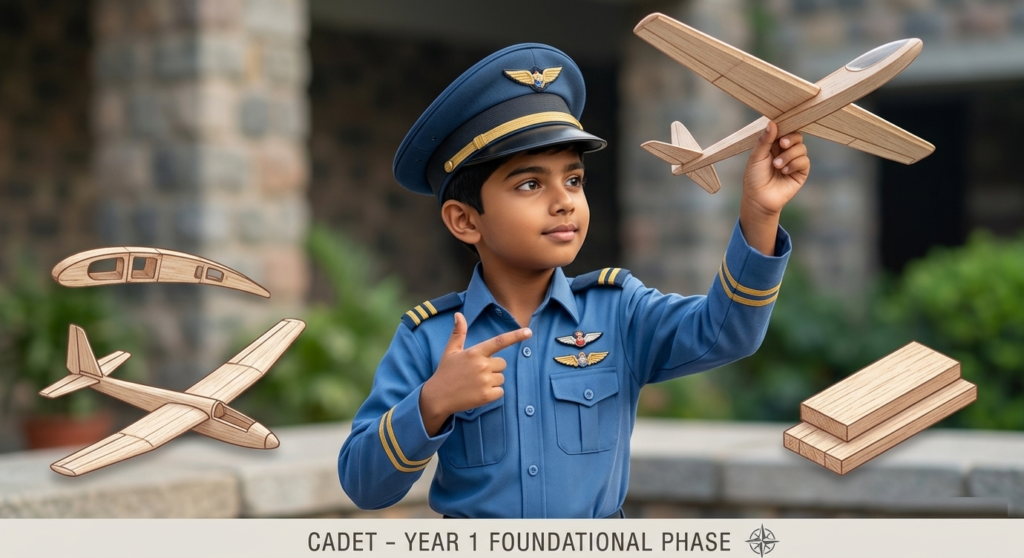
The CADET is designed for students from Grade 4 onwards, and it follows a three-semester learning structure designed to provide students with a balanced blend of theoretical knowledge and practical experience. Each semester spans 2.5 months with 15 hours of structured learning The program integrates classroom concepts with hands-on aeromodelling activities, ensuring that students immediately apply what they learn. This structured approach helps maintain continuous engagement, curiosity, and momentum, making the learning journey both exciting and meaningful.
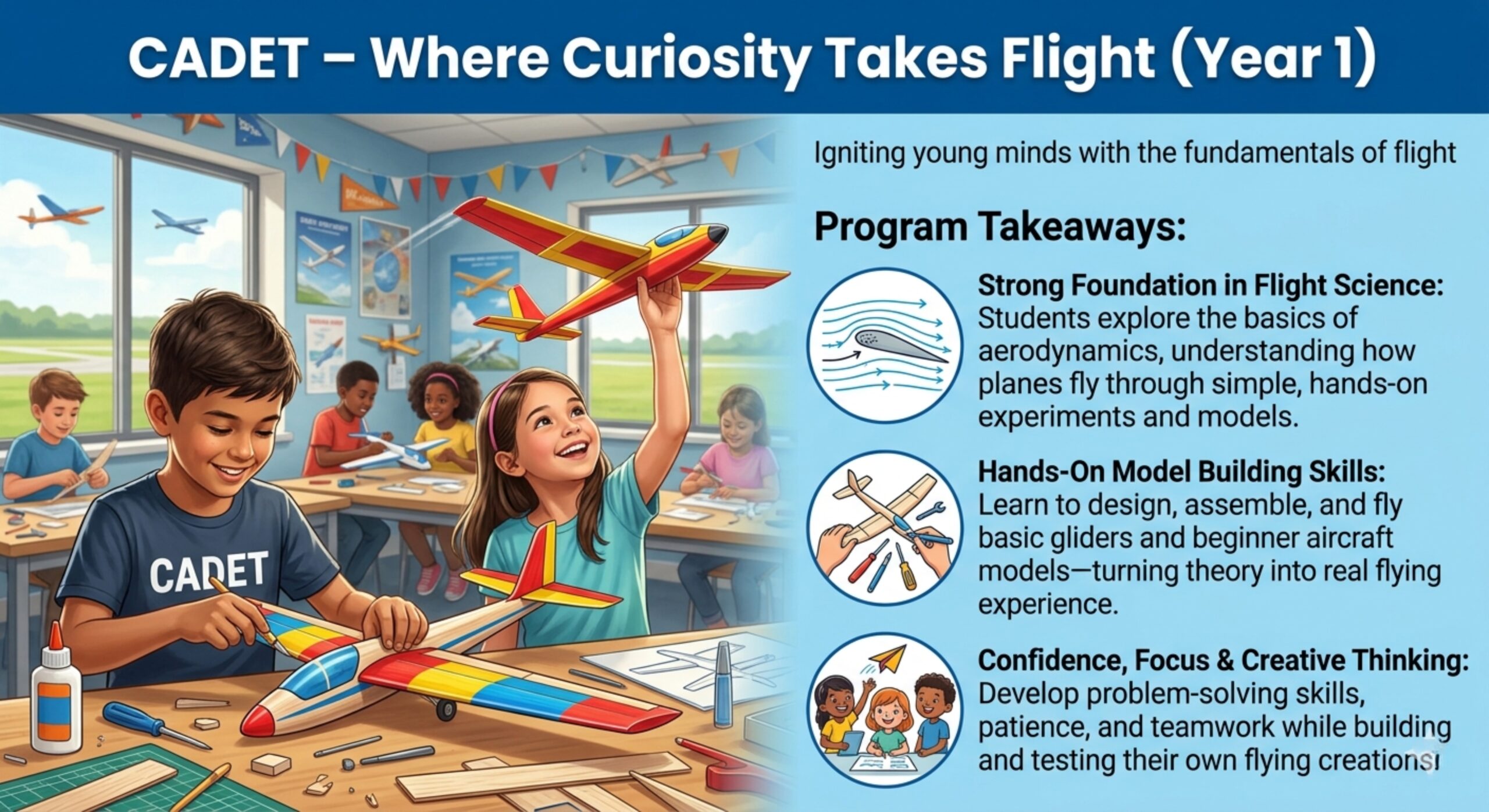
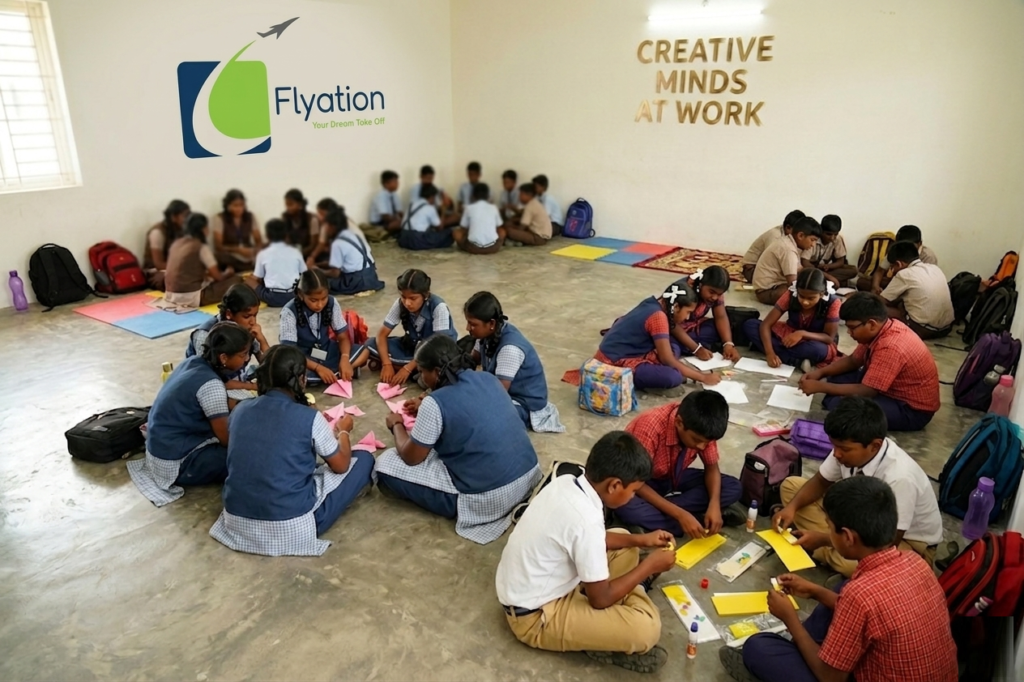
Students experience the science of flight through a step-by-step hands-on process:
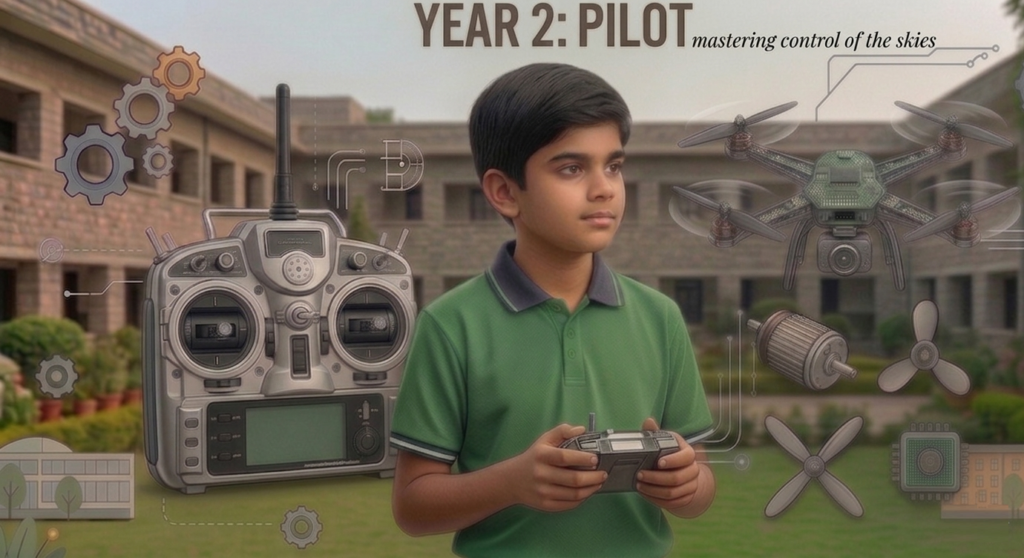
(Drone Assembly and Flight Training)
The PILOT Program at Flyation is designed for students who want to move beyond the foundation program and explore the exciting world of drone technology and unmanned aerial systems. This program introduces students to the design, assembly, and operation of drones, providing hands-on experience with modern aviation technology. Through guided practical sessions, students learn how different components work together to create a stable and controllable flying system. The program combines engineering principles, electronics, and flight control concepts, giving students a deeper understanding of how drones function in real-world applications.
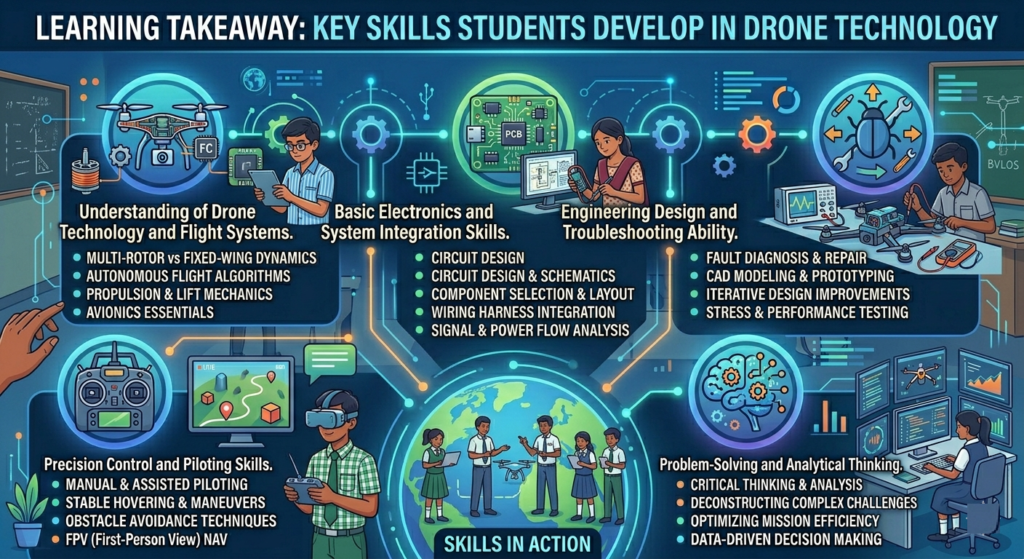
Students learn about the essential components of a drone, including frame, motors, propellers, electronic speed controllers (ESC), flight controllers, and batteries.
Participants assemble their own drone under expert guidance, gaining practical knowledge of mechanical structure, wiring, and system integration.
Students understand how drones maintain stability in flight using control systems and sensor technology.
Students experience the excitement of learning to operate and safely fly a drone, practising take-off, hovering, manoeuvring, and landing.
The program introduces students to how drones are used in aerial photography, mapping, agriculture, disaster management, and surveillance.
(RC Aircraft Assembly and Flight Training)
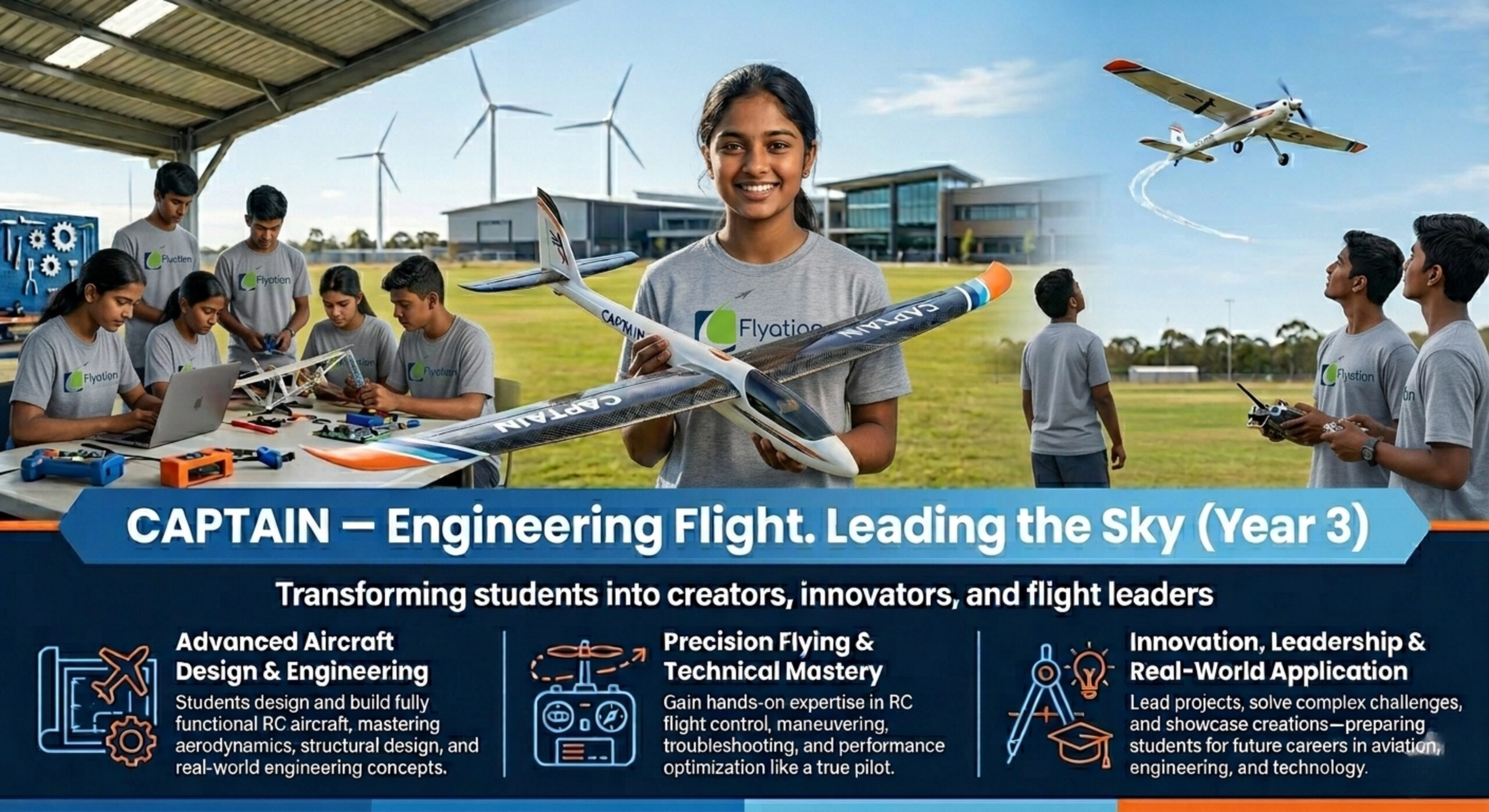
The Captain Program at Flyation is designed for students who are ready to advance their aeromodelling skills to a professional level. This program focuses on the design, assembly, and operation of Radio-Controlled (RC) aircraft, providing participants with understanding a deeper aerodynamics, flight of mechanics, and aircraft control systems. Through a combination of engineering concepts and hands-on practice, students learn how modern RC aircraft are built configured, and controlled during flight.
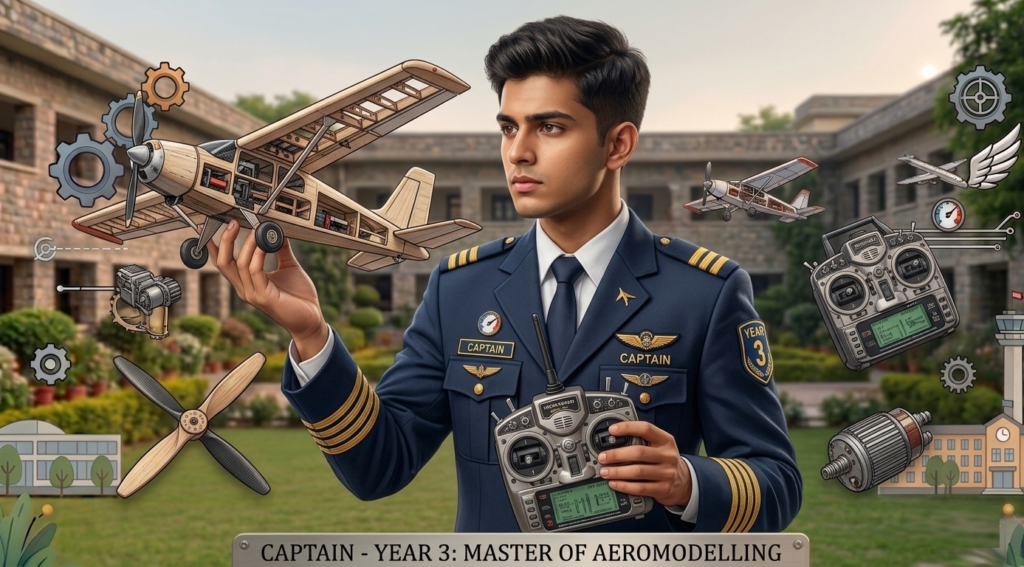
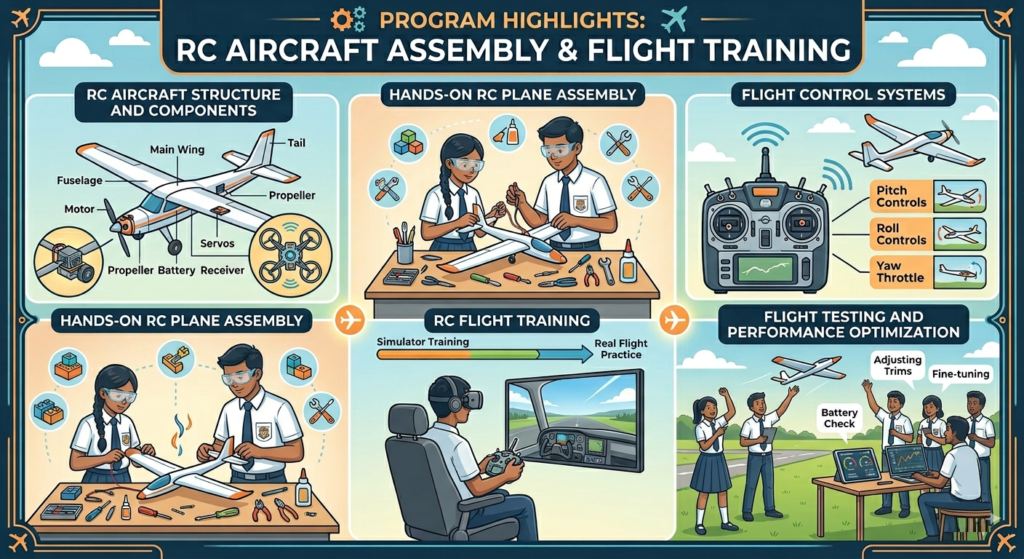
Students gain knowledge about the key components of an RC aircraft, including airframe structure, propulsion systems, servos, receivers, transmitters, and control linkages.
Participants assemble an RC aircraft under expert guidance, learning how different mechanical and electronic components integrate to create a fully functional flying system.
Students understand the working of control surfaces such as ailerons, elevators, and rudders, and how radio signals from the transmitter control the aircraft during flight.
Students are trained in safe and controlled RC aircraft flying, including take-off, manoeuvring, coordinated turns, and landing techniques.
Participants analyze aircraft performance and learn how adjustments in balance, control surfaces, and propulsion systems influence flight behaviour.